Yellowstone Lake: Complete Guide to Boating, Fishing & Thermal Features
Yellowstone Lake commands the spotlight as North America's largest high-altitude freshwater lake, a magnificent 136-square-mile wilderness sanctuary sitting 7,732 feet above sea level in the heart of Yellowstone National Park. This pristine alpine lake stretches 20 miles long and 14 miles wide, offering unparalleled opportunities for boating, fishing, and witnessing unique underwater thermal features that make it one of the world's most extraordinary bodies of water. With 110 miles of shoreline and depths reaching 394 feet, Yellowstone Lake provides access to some of the park's most remote wilderness areas while showcasing a hidden world of underwater geysers and hot springs.
• Size: 136 square miles (largest in Wyoming)
• Elevation: 7,732 feet above sea level
• Maximum Depth: 394 feet
• Shoreline: 110 miles
• Water Temperature: Surface 60°F in summer, underwater vents reach 340°F
• Access Points: Bridge Bay Marina, Grant Village, Fishing Bridge
Geographic Significance - A Lake of Superlatives
Record-Breaking Natural Wonder
Yellowstone Lake holds the distinguished title of largest freshwater lake above 7,000 feet in North America, covering an area approximately 100 times the size of New York City's Central Park. The lake's massive 12,095,264 acre-feet of water creates its own weather patterns and microclimate, while its unique position at the Continental Divide makes it the source of waters that eventually flow to both the Atlantic and Pacific Oceans through the Yellowstone River system.
The lake's impressive statistics reflect its geological significance: an average depth of 139 feet, maximum depth of 394 feet east of Stevenson Island, and a complete water turnover cycle every 8-10 years. More than 141 rivers and streams feed into the lake, with the Yellowstone River providing the primary inflow at the Southeast Arm while serving as the sole outlet at historic Fishing Bridge.
• Water Journey: Lake waters flow north via Yellowstone River to Missouri River to Mississippi River to Gulf of Mexico
• Elevation Impact: High altitude creates unique ecosystem supporting cold-water fish species
• Weather Influence: Lake moderates local temperatures and creates afternoon thunderstorms
• Ice Formation: Freezes 3 feet thick in winter, creating spectacular thermal feature visibility
Underwater Thermal Wonderland - Hidden Hydrothermal System
World's Most Extreme Underwater Thermal Features
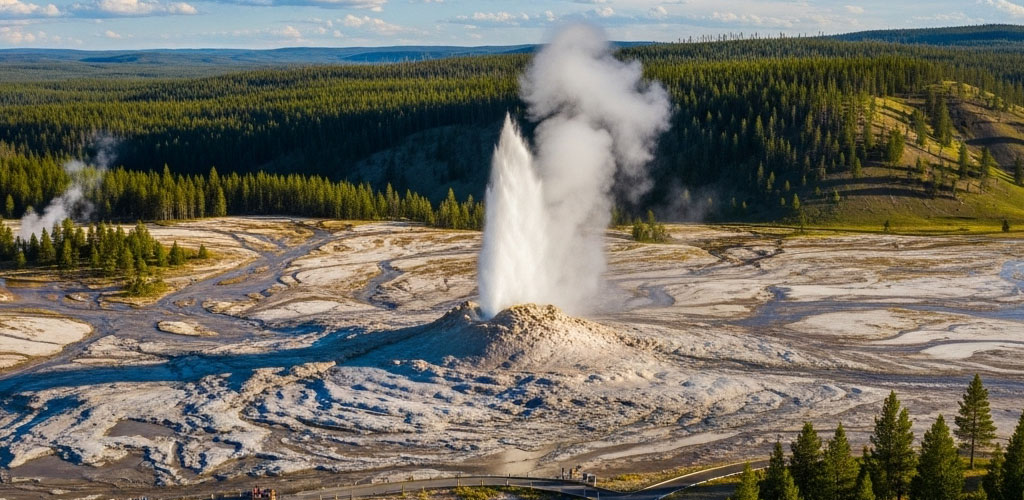
Beneath Yellowstone Lake's pristine surface lies one of the world's most extraordinary hydrothermal systems, featuring underwater geysers, hot springs, and fumaroles that rival any land-based thermal area. Scientists have recorded the hottest hydrothermal vent temperatures anywhere in Yellowstone—170°C (340°F)—on the lake bottom, creating a vigorous underwater thermal system that would make an impressive geyser basin if exposed on land.
The underwater thermal features create visible phenomena that fascinate visitors year-round. During summer, underwater geysers appear as slick spots or slight bulges on the lake surface, while winter reveals their locations through dramatic melt holes in the otherwise solid 3-foot-thick ice cover. These thermal areas concentrate particularly in Mary Bay, where researchers have discovered hollow silica chimneys several feet tall rising from the lake bottom—remnants of ancient geyser plumbing systems now submerged.
West Thumb Geyser Basin - Thermal-Aquatic Interface
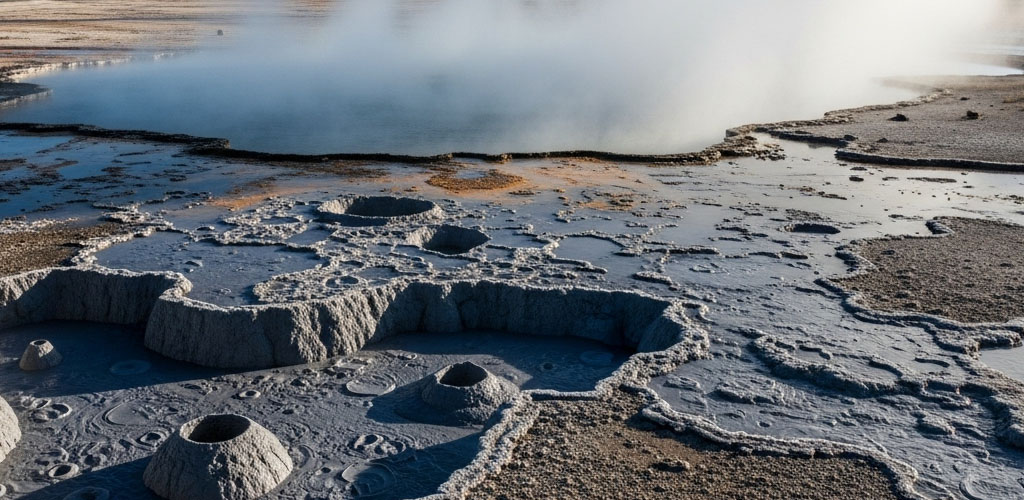
West Thumb Geyser Basin represents the unique intersection of Yellowstone's thermal and aquatic systems, where hot springs emerge directly from the lake bottom and shoreline thermal features create dramatic visual contrasts. This largest geyser basin on Yellowstone Lake's shores includes the famous Fishing Cone, where early explorers stood on the thermal feature to catch fish from the lake and cook them immediately in the 170°F vent—a practice no longer permitted but illustrative of the extraordinary thermal-aquatic environment.
The basin's location provides unparalleled photographic opportunities as steaming thermal features frame against the massive lake and distant mountain ranges. The heat source lies relatively close to the surface at only 10,000 feet depth, creating the intense thermal activity that makes West Thumb one of Yellowstone's most dynamic hydrothermal areas.
🔬 Underwater Thermal Discoveries
- Mary Bay: Hottest underwater spot at 252°F with silica chimneys up to several feet tall
- Bridge Bay: Rock spires up to 20 feet tall from thermal activity
- Sedge Bay: Underwater geysers, hot springs, and fumaroles
- Winter Visibility: Thermal features create melt holes in 3-foot ice cover
- Scientific Value: Living laboratory for hydrothermal research
Boating Adventures - Accessing Remote Wilderness
Recreational Boating Opportunities
Yellowstone Lake offers extraordinary boating experiences that provide access to wilderness areas requiring days of backcountry hiking to reach on foot. The lake permits powerboats, sailboats, canoes, and kayaks with proper Yellowstone Boating Permits, though personal watercraft, jet skis, and water skiing are prohibited to maintain the pristine wilderness character and protect sensitive thermal features.
Bridge Bay Marina serves as the primary boating hub, offering full-service facilities including boat rentals, fuel, supplies, and launch services. Grant Village provides additional boat ramp access at West Thumb, while the lake's vast size allows for multi-day exploration of remote arms and wilderness shorelines. Boaters must familiarize themselves with 5-mile-per-hour zones in southern arms and no-motor areas designed to protect sensitive wildlife and thermal environments.
⛵ Boating Regulations & Access:
- Permit Required: Yellowstone Boating Permit for all watercraft
- Length Limit: Maximum 40 feet for all vessels
- Launch Points: Bridge Bay Marina, Grant Village boat ramp
- Speed Zones: 5 mph limits in southern arms, no-motor zones marked
- Prohibited: Jet skis, personal watercraft, airboats, water skiing, wakeboarding
- Season: Typically Memorial Day through September weather permitting
Guided Charter Experiences
Professional charter services provide expertly guided fishing and sightseeing experiences that showcase the lake's most spectacular and remote areas. These services include all necessary gear and take visitors to locations with optimal fishing potential or scenic beauty impossible to reach without local knowledge. Charter captains provide insights into lake ecology, thermal features, and wildlife patterns while ensuring safe navigation of this large and sometimes challenging body of water.
Sightseeing charters offer the best opportunity to reach remote wilderness areas in a short timeframe, providing access to thermal features, wildlife viewing areas, and scenic vistas available only from the water. These experiences range from 2-hour minimum trips to full-day expeditions exploring the lake's most pristine and isolated regions.
World-Class Fishing - Native Cutthroat Trout Paradise
Native Species and Fishing Excellence
Yellowstone Lake supports a world-renowned population of native Yellowstone Cutthroat Trout, offering anglers the opportunity to fish for indigenous species in pristine wilderness settings. These gorgeous native fish represent one of the last strongholds of pure cutthroat trout genetics, making every fishing experience both recreational and conservation-significant. The lake's cold, clear waters and abundant food sources create ideal conditions for healthy trout populations.
Professional fishing guides provide essential local knowledge for success on this large and complex body of water, taking anglers to areas with the highest fish concentrations while providing proper gear and techniques. The lake's size and varying depths require specialized knowledge of seasonal fish movements, weather patterns, and productive fishing locations that change throughout the season.
• License Required: Yellowstone fishing permit for ages 16+
• Primary Species: Native Yellowstone Cutthroat Trout
• Invasive Concern: Lake Trout present (removal required)
• Charter Services: Professional guides with gear provided
• Best Areas: Accessible via boat to remote shorelines and tributaries
• Season: Typically late May through October
Conservation and Management
Yellowstone Lake represents a critical conservation success story where native fish restoration efforts continue protecting indigenous cutthroat trout populations from invasive lake trout. Anglers play an essential role in this conservation effort through required removal of any lake trout caught, while harvest regulations protect native cutthroat populations for future generations.
The lake's fishing regulations balance recreational opportunities with ecosystem protection, ensuring this pristine fishery remains available for future anglers while supporting the broader Yellowstone ecosystem that depends on healthy native fish populations for wildlife food sources.
Seasonal Experiences - Year-Round Natural Spectacle
Summer Activities and Peak Season
June through August: Peak season offers full access to all boating and fishing opportunities with warm surface water temperatures reaching the low 60s°F. This period provides the best conditions for extended lake exploration, camping at nearby Bridge Bay and Grant Village, and combining lake activities with thermal feature viewing at West Thumb Geyser Basin.
Weather Considerations: Summer afternoon thunderstorms develop regularly over the lake, creating spectacular lightning displays but requiring careful attention to weather conditions for boating safety. Early morning typically offers the calmest conditions for both fishing and photography, while afternoon storms often clear to spectacular evening light.
Spring and Fall Transitions
Spring (May-June): Ice-out typically occurs in late May or early June, marking the beginning of the boating season. Spring offers excellent fishing as trout become active after winter, though weather remains unpredictable with possible snow and cold temperatures. Thermal features become more visible as steam contrasts dramatically with cool air temperatures.
Fall (September-October): Outstanding fishing conditions with active trout preparing for winter and spectacular autumn colors reflecting in the lake's pristine waters. Cooler temperatures reduce boat traffic while providing excellent wildlife viewing opportunities as animals concentrate near shoreline areas.
Winter Wonderland
Winter Access: The frozen lake creates unique opportunities for experienced winter recreationists, though access requires snowshoes or skis and proper winter gear. The 3-foot-thick ice cover reveals underwater thermal features as dramatic melt holes and steaming areas, creating an otherworldly landscape impossible to experience during other seasons.
Photography Opportunities: Winter provides extraordinary photographic opportunities as thermal features create steam patterns against snow-covered landscapes, while ice formations around thermal areas create sculptural masterpieces. However, winter access requires significant experience and preparation due to extreme weather conditions and limited emergency services.
⚠️ Important Safety Considerations
- Weather Awareness: Afternoon thunderstorms develop rapidly with dangerous lightning
- Water Temperature: Hypothermia risk even in summer due to cold water
- Size and Isolation: Large lake with limited emergency access to remote areas
- Thermal Features: Hot springs and underwater vents create scalding water areas
- Winter Hazards: Unstable ice near thermal features, extreme weather conditions
Access Points and Visitor Services
Bridge Bay - Primary Lake Hub
Bridge Bay serves as Yellowstone Lake's primary visitor destination, featuring the park's largest marina with full services including boat rentals, fuel, launch facilities, and camping. The Bridge Bay Campground provides lakeside camping opportunities with easy access to both boating and fishing activities, while the marina store stocks essential supplies and provides local information.
The area's central location makes it ideal for day trips to various lake regions while providing the infrastructure necessary for extended lake exploration. Professional guide services operate from Bridge Bay, offering both fishing and sightseeing charters for visitors seeking expert-guided lake experiences.
Grant Village and West Thumb
Grant Village provides alternative lake access through its boat ramp while serving as the gateway to West Thumb Geyser Basin's unique thermal-aquatic environment. The village offers lodging, dining, and visitor services, making it an excellent base for combining lake activities with thermal feature exploration.
West Thumb Information Station provides educational resources about the lake's thermal features and ecology, while the geyser basin's boardwalk system allows close-up viewing of the unique environment where thermal features meet pristine lake waters.
Fishing Bridge - Historic Lake Outlet
Historic Fishing Bridge marks the lake's sole outlet where the Yellowstone River begins its journey toward the Missouri and Mississippi Rivers. Though fishing is no longer permitted from the bridge to protect spawning cutthroat trout, the area provides excellent wildlife viewing opportunities and serves as an important visitor education center.
The Fishing Bridge Visitor Center offers detailed information about lake ecology, fish populations, and conservation efforts, while the surrounding area provides opportunities to observe the transition from lake to river ecosystem.
Wildlife and Ecosystem
Lake-Dependent Wildlife
Yellowstone Lake supports diverse wildlife populations that depend on the lake ecosystem for survival. Bald eagles and osprey fish the productive waters, while great blue herons and various waterfowl species utilize shoreline habitats. River otters occasionally appear in quieter bays, and the lake's cutthroat trout provide essential food sources for numerous predator species including bears, which fish spawning streams during spring runs.
The lake's vast wilderness shorelines provide critical habitat for moose, elk, and deer, while the thermal areas support unique microbial communities that form the base of specialized food webs. Early morning and evening provide the best wildlife viewing opportunities as animals come to drink and feed along the expansive shoreline.
Planning Your Lake Adventure
Essential Preparation
Successful Yellowstone Lake experiences require advance planning due to the lake's size, changing weather conditions, and permit requirements. Reserve camping at Bridge Bay or lodging at Grant Village well in advance, particularly for summer visits. Obtain necessary boating permits and fishing licenses before arrival, and check current weather conditions and forecasts.
Pack appropriate gear for changing mountain weather conditions, including rain gear, warm clothing, and sun protection. For boating activities, bring safety equipment including life jackets, emergency communication devices, and navigation tools appropriate for large lake conditions.
Connecting Lake Experiences
Combine Yellowstone Lake activities with nearby attractions including Grand Canyon of Yellowstone viewpoints, thermal features at West Thumb, and hiking trails that provide elevated lake perspectives. The Grant Village area offers convenient accommodation for multi-day lake exploration.
Plan sufficient time to truly appreciate this massive wilderness lake—its size and complexity reward extended exploration while providing access to some of Yellowstone's most pristine and remote wilderness areas. Whether fishing for native cutthroat trout, exploring underwater thermal features, or simply experiencing the tranquility of North America's largest high-altitude lake, Yellowstone Lake offers adventures that exemplify the raw beauty and geological wonders that make Yellowstone National Park an irreplaceable natural treasure.