Yellowstone Landscape: America's Most Extraordinary Geological Wonderland
Yellowstone National Park presents one of Earth's most remarkable landscapes—a living geological laboratory where ancient volcanic forces meet pristine wilderness. This extraordinary terrain, shaped by 150 million years of compression, glaciation, and volcanism, offers visitors an unparalleled glimpse into our planet's dynamic processes. From the world's largest concentration of geysers to towering mountain peaks reaching 11,358 feet, Yellowstone's landscape tells the story of a continent in constant evolution.
🌋 Landscape Quick Facts
- Geological Base: Sits atop one of the largest active volcanic systems on Earth
- Geothermal Features: Over 10,000 hydrothermal features (half of all known worldwide)
- Highest Peak: Eagle Peak at 11,358 feet in the Absaroka Range
- Geyser Concentration: 55% of the world's geysers (300-500 active)
- Landscape Age: Formed over 150 million years of geological activity
The Volcanic Foundation: Understanding Yellowstone's Geological Base
Beneath Yellowstone's serene surface lies a geological powerhouse. The park sits directly above a massive underground magma chamber that comes remarkably close to the surface—as little as 3-8 miles beneath Sour Creek Dome and 8-12 miles beneath Mallard Lake Dome. This proximity creates the park's signature geothermal activity and gives rise to its most distinctive landscape features.
The Yellowstone Caldera, formed by three massive volcanic eruptions over the past 2.1 million years, creates the foundation for today's extraordinary terrain. This volcanic activity continues to shape the landscape, with two resurgent domes inside the caldera that inflate and subside as magma and hydrothermal fluids shift beneath them. The result is a landscape in constant, subtle motion—a reminder that Yellowstone remains geologically active.
Geothermal Landscapes: Where Earth's Interior Meets the Surface
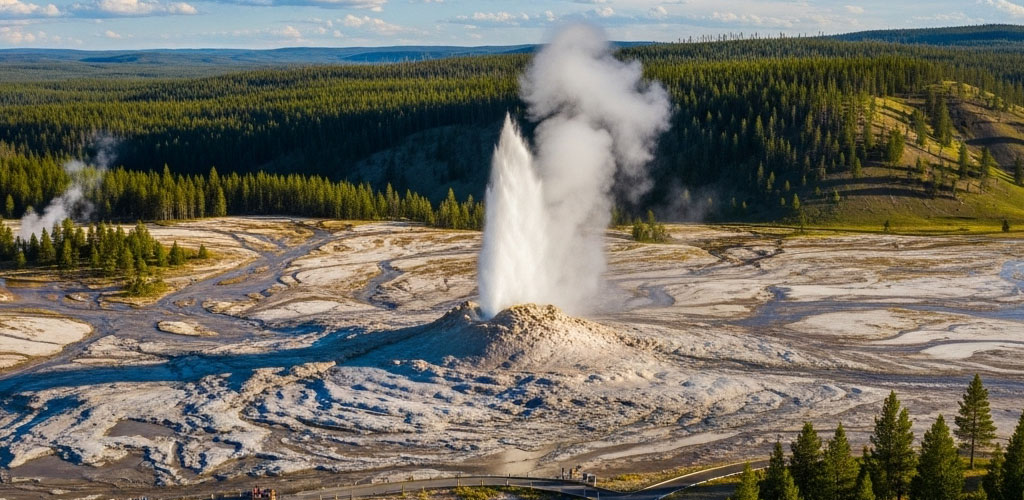
Yellowstone's geothermal features create some of the planet's most alien and beautiful landscapes. The park contains more than 10,000 hydrothermal features distributed across nine major geyser basins, each with its own character and geological story.
The Grand Prismatic Ecosystem
At Midway Geyser Basin, Grand Prismatic Spring showcases nature's artistry through geology. This massive hot spring, larger than a football field, displays rainbow colors created by thermophilic bacteria that thrive in different temperature zones. The landscape here seems otherworldly, with mineral-rich waters creating concentric rings of brilliant blues, greens, yellows, and oranges against the surrounding geysers and thermal features.
Mammoth Hot Springs Terraces
Near the park's North Entrance, a completely different geothermal landscape emerges. Mammoth Hot Springs creates cascading limestone terraces through an ongoing process where hot water dissolves and redeposits calcium carbonate. These formations resemble "a cave turned inside out," with colorful striping created by heat-loving organisms. The terraces constantly evolve, making each visit a unique landscape experience.
⚠️ Geothermal Safety
Critical Safety Information: Geothermal landscapes may look solid but surfaces around hot springs can be extremely thin. Waters reach boiling temperatures and can be highly acidic. Always stay on designated trails and boardwalks when exploring these areas.
Mountain Landscapes: The Absaroka and Gallatin Ranges
Rising dramatically from Yellowstone's volcanic plateau, the park's mountain landscapes offer breathtaking contrasts to the geothermal areas. The Absaroka Range dominates the eastern portions of the park, with many summits exceeding 10,000 feet elevation. Eagle Peak, the park's highest point at 11,358 feet, provides panoramic views across the entire Yellowstone ecosystem.
These rugged mountains tell stories of ancient volcanic activity combined with more recent glacial carving. Deep valleys cut by glaciers create dramatic vistas, while exposed rock faces reveal layers of geological history spanning millions of years. The mountain landscapes provide critical habitat for wildlife and serve as watersheds feeding Yellowstone's rivers and thermal features.
Glacial Landscapes and Valleys
Throughout the park, evidence of massive glacial activity shapes the current landscape. Glacier-carved valleys, including the famous Hayden Valley and Lamar Valley, provide some of Yellowstone's most photographed vistas. These broad, U-shaped valleys contrast sharply with the narrow, V-shaped canyons carved by rivers, creating a diverse topographical tapestry.
The Grand Canyon of Yellowstone: Where Water Carves Stone
Perhaps no landscape feature captures Yellowstone's geological drama better than the Grand Canyon of the Yellowstone. Here, the Yellowstone River has carved a spectacular gorge through ancient lava flows, creating one of the park's most iconic vistas. The canyon's colorful walls, painted by hydrothermal activity over thousands of years, showcase yellows, reds, and oranges that gave the region its name.
Two magnificent waterfalls—the Upper Falls at 109 feet and the Lower Falls at 308 feet—demonstrate the ongoing power of water to shape this volcanic landscape. Artist Point provides the classic viewpoint, offering visitors a perspective that has inspired artists and photographers for over 150 years.
Ecosystem Landscapes: Where Geology Meets Biology
Yellowstone's diverse geological foundation creates equally diverse ecosystem landscapes. From thermal areas where specialized bacteria create living rainbows to high-altitude meadows supporting grizzly bears, the park's geology directly influences its biological communities.
Thermal Oases
Around geothermal features, unique microclimates support plant and animal life throughout harsh winters. These thermal areas create landscape pockets where vegetation remains green year-round, providing critical habitat for wildlife when snow covers surrounding areas.
Alpine Landscapes
Above 9,000 feet, Yellowstone's landscape transitions to alpine tundra where harsh conditions create specialized plant communities. These high-elevation areas experience extreme weather but support unique flowering displays during brief summer growing seasons.
📸 Best Photography Locations
- Artist Point: Classic Grand Canyon of Yellowstone view
- Grand Prismatic Overlook: Elevated view of colorful hot spring
- Mammoth Terraces: Unique limestone formations
- Hayden Valley: Wide-open landscape with wildlife viewing
- Mount Washburn: 360-degree panoramic mountain views
- Lamar Valley: "America's Serengeti" landscape
Seasonal Landscape Transformations
Yellowstone's landscape undergoes dramatic seasonal transformations that provide visitors with completely different experiences throughout the year. Understanding these changes helps visitors appreciate the park's dynamic nature.
Winter Wonderland (December-March)
Snow transforms Yellowstone into a monochromatic masterpiece where geothermal features create dramatic contrasts. Steam from hot springs and geysers becomes more visible in cold air, creating ethereal landscape scenes. The contrast between white snow and dark thermal areas provides stunning photographic opportunities.
Spring Awakening (April-May)
As snow melts, Yellowstone's landscape reveals itself in layers. Thermal areas emerge first, followed by lower elevation valleys. This gradual revelation creates dynamic landscape changes almost daily during peak melt season.
Summer Glory (June-August)
Peak season reveals Yellowstone's landscape in full glory. Alpine wildflower displays paint high meadows in brilliant colors, while thermal features remain active against lush green backgrounds. This season offers the most accessible landscape viewing opportunities.
Autumn Splendor (September-November)
Fall brings spectacular color changes as aspens turn golden yellow and thermal features become more prominent against darker backgrounds. This season often provides the most dramatic landscape photography conditions.
Unique Geological Formations Throughout the Park
Beyond the major landscape features, Yellowstone contains numerous unique geological formations that add character to its terrain:
Fossil Forests
Specimen Ridge contains one of the world's largest petrified forests, where ancient trees were preserved by volcanic ash. These fossil forests provide glimpses into Yellowstone's prehistoric landscapes.
Obsidian Cliff
This black volcanic glass mountain demonstrates Yellowstone's volcanic past. Native Americans quarried obsidian here for thousands of years, creating tools from this naturally occurring glass.
Mud Volcanoes
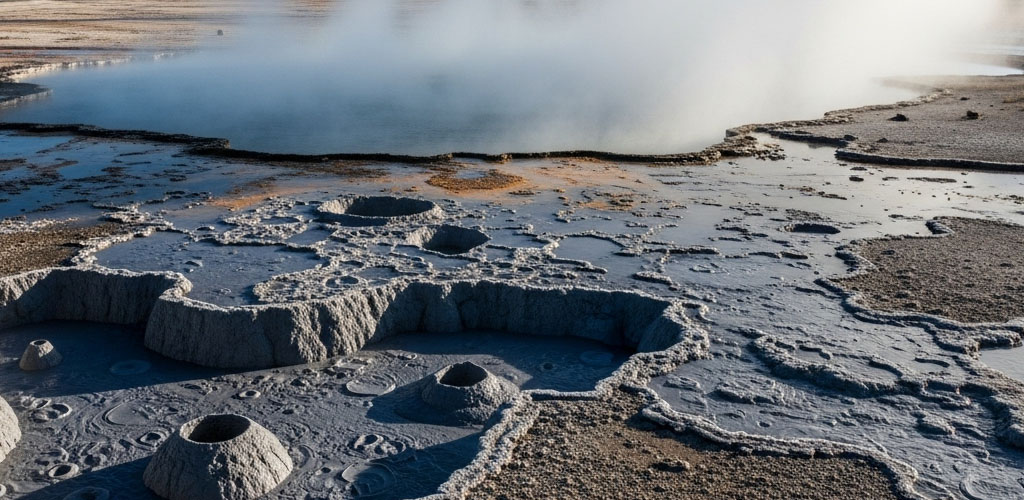
In the Mud Volcano area, acidic thermal features create bubbling mud pots and sulfurous landscapes that resemble alien worlds. These features demonstrate the diverse ways geothermal activity shapes terrain.
🎯 Planning Your Landscape Adventure
- Best Overall Season: June-September for access to all landscape types
- Optimal Photography Times: Golden hour (sunrise/sunset) for dramatic lighting
- Essential Gear: Wide-angle lens, polarizing filter, tripod for long exposures
- Recommended Duration: Minimum 3-4 days to experience major landscape zones
- Fitness Level: Varies from easy boardwalk viewing to strenuous mountain hikes
Conservation and Landscape Preservation
Yellowstone's landscape exists today because of dedicated conservation efforts spanning over 150 years. As the world's first national park, Yellowstone serves as a model for preserving geological and ecological landscapes for future generations.
Visitors play a crucial role in landscape preservation by following Leave No Trace principles, staying on designated trails, and respecting thermal features. These seemingly small actions help protect the delicate geological and biological processes that create Yellowstone's extraordinary landscape.
Experiencing Yellowstone's Landscape Safely
To fully appreciate Yellowstone's landscape while ensuring safety, visitors should understand the unique hazards present in this geologically active environment:
Thermal Area Safety
Geothermal landscapes present serious dangers. Water temperatures often exceed 200°F, and the ground around thermal features can be unstable. Many thermal features have no barriers except for designated trails and boardwalks, which visitors must never leave.
Wildlife in Landscape Settings
Yellowstone's diverse landscapes support large predators and dangerous wildlife. Understanding how animals use different landscape zones—from thermal areas to mountain meadows—helps visitors maintain appropriate distances while observing wildlife in their natural settings.
Weather and High-Altitude Considerations
Mountain landscapes can experience rapid weather changes and altitude-related challenges. Visitors should prepare for temperature variations and potential altitude effects when exploring higher elevation landscape areas.
Yellowstone's landscape represents one of the most remarkable geological showcases on Earth. From bubbling geothermal features to towering mountain peaks, from ancient fossil forests to active volcanic processes, the park offers visitors an unparalleled opportunity to witness our planet's dynamic forces in action. Whether you're drawn by scientific curiosity, photographic opportunities, or simple wonder at natural beauty, Yellowstone's landscape provides experiences that inspire and educate, creating memories that last a lifetime.
For official park information and current landscape conditions, visit nps.gov/yell.